
Engineering note
Event-Based vs Frame-Based Vision: Choosing for the Decision Loop
Compare event-based and frame-based vision by latency, data behavior, image content and integration trade-offs for autonomous edge systems.
Read the note →A synchronized processing platform that combines complementary sensors so autonomous and industrial systems can maintain awareness when any single modality is limited.
No single sensor performs perfectly in every environment. Visible cameras can struggle with glare or darkness, thermal sensors provide different contrast, event sensors excel at motion, and inertial measurements preserve short-term dynamics when visual features disappear. Fusion works when the electronics, timestamps, calibration and software are designed together.
Alvexis develops carrier electronics and processing pipelines that bring these inputs into a common time base. The resulting platform supports synchronized capture, calibration, feature-level fusion and application-specific inference close to the sensors.
Event, frame, thermal, inertial and customer-specific sources.
Hardware triggers, shared clocks and timestamp alignment.
Intrinsic, extrinsic and timing calibration management.
Feature, track or decision-level fusion on embedded compute.
Values depend on the selected sensors, processor, interfaces, environment and acceptance method.
| Area | Definition |
|---|---|
| Sensor set | Selected around the mission environment and failure modes. |
| Synchronization accuracy | Specified after interface and clock architecture definition. |
| Compute partition | FPGA, NPU and MPU workloads are assigned from latency and power needs. |
| Program status | Custom platform development; interfaces and mechanical envelope are program specific. |
Compare event-based and frame-based vision by latency, data behavior, image content and integration trade-offs for autonomous edge systems.
Read the note →A practical guide to partitioning edge AI workloads across FPGA, NPU, MPU and MCU resources by latency, power and software needs.
Read the note →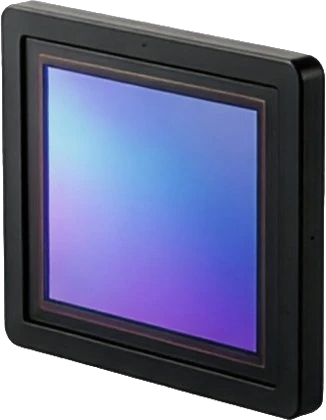
Event-based vision hardware for low-latency motion perception, FPGA preprocessing and local AI inference in autonomous and industrial systems.
Explore system →Send the interfaces, environment, decision metric and pilot quantity. We will identify the architecture and validation plan.