
Interfaces that fit
Map camera, Ethernet, USB, serial and industrial I/O requirements to the selected module. Review bandwidth, connector placement, isolation and signal integrity before committing to layout.
CUSTOM HARDWARE & PCB DESIGN
Connect your compute module to the interfaces, power supply and physical space your product actually needs. Alvexis develops custom carrier boards, embedded software and mechanical integration as one engineering scope.
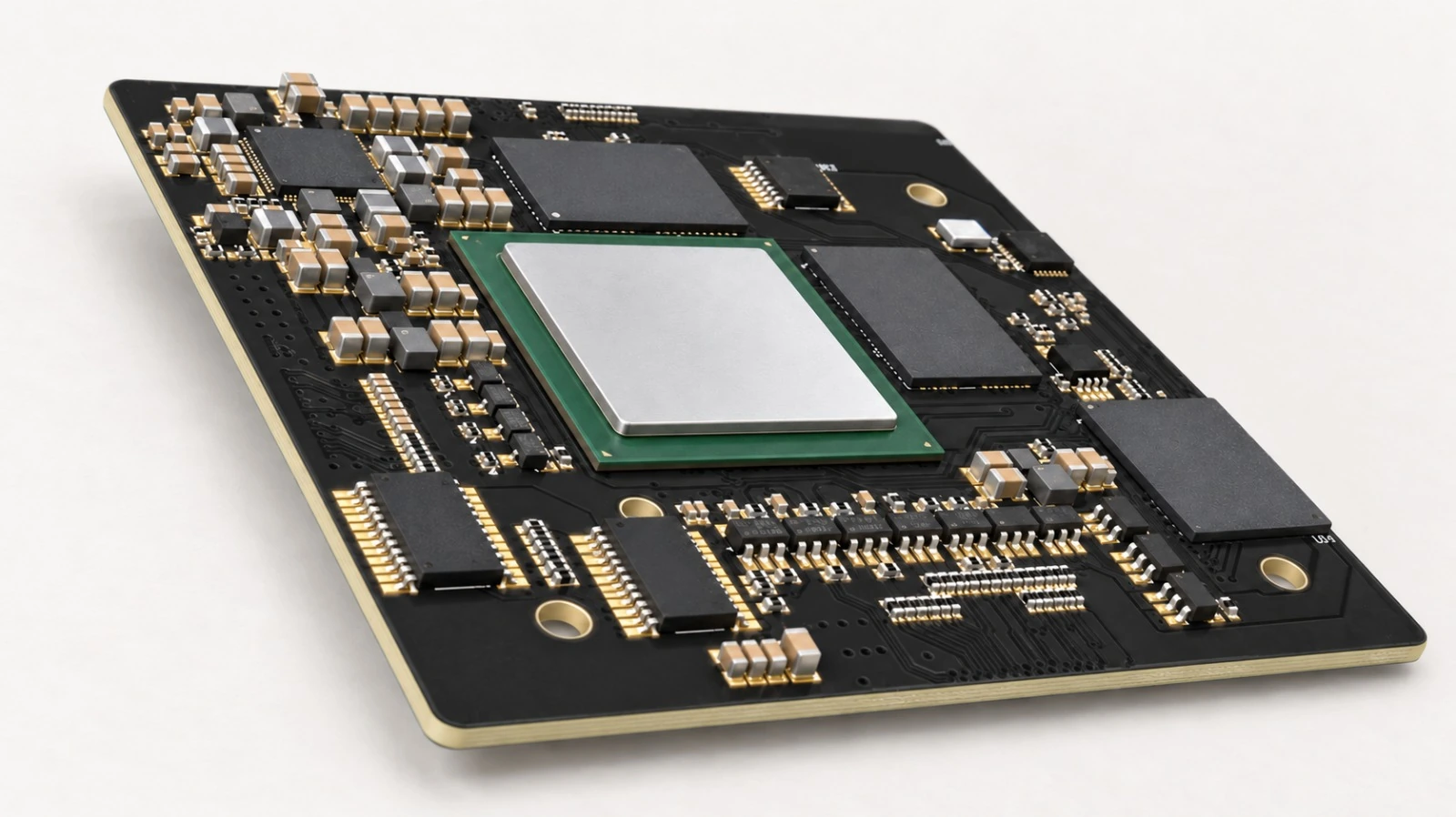
A development board helps you explore a processor. A product needs the right connectors, reliable power, a defined boot path and a mechanical fit. We start with the module documentation and your system requirements, then agree a design and validation plan.
Map camera, Ethernet, USB, serial and industrial I/O requirements to the selected module. Review bandwidth, connector placement, isolation and signal integrity before committing to layout.
Define input power, sequencing, protection, thermal paths and mounting. Develop the electronics with the enclosure so connectors, cooling and assembly work together.
Plan test points and diagnostics early. Bring up the prototype, investigate hardware and software interactions, and prepare the agreed manufacturing and test documentation.
Project scope
The proposal defines deliverables, design-file access, IP ownership and support. Prototype fabrication, assembly, production units and any external compliance testing are quoted within the agreed scope.
Share the module, interfaces, power input, enclosure constraints and intended operating environment.
Develop the board, software integration and mechanical interfaces together. Review the design before prototype fabrication.
Check boot, power rails, interfaces and representative workloads on the physical prototype.
Resolve the agreed findings and provide the production and test package defined in the proposal.
Yes. We can assess an Alvexis platform or a customer-selected module against the required interfaces, documentation availability and lifecycle needs. The feasibility review determines what can be reused and what needs a dedicated design.
The schedule depends on interface complexity, software support, PCB fabrication, component availability and the validation scope. We define milestones after reviewing the requirements; reusing a suitable platform and developing software and mechanics in parallel can shorten iteration.
The main drivers are interface and layout complexity, power architecture, software integration, enclosure constraints and the required verification. NRE covers agreed development work; unit production and ongoing support are scoped separately.
The project agreement specifies the files, documentation, licensing and IP arrangements. Agree the required handover package before development so your manufacturing partner can use the result as intended.
Module or development kit, interface list, input power, dimensions and target quantities.
Interface budget, software support, mechanical layout and validation criteria.
Schematics, PCB layout, bill of materials, prototype test findings and manufacturing documentation.
Handover files, licences and intellectual-property terms are defined in the project proposal.
A short technical brief is enough to start. Share the application, current development stage and the engineering support you need.
Prefer email? info@alvexis.ai
Describe your application. We review the requirements, agree the scope and prepare a development proposal.
Custom PCB design starts with power, data paths, mechanical constraints and production quantities. Circuit board design includes the schematic, layout, stack-up and interfaces; production handover also needs the agreed fabrication data, assembly information and test access. A custom carrier board must match the compute module and the complete connected system.
AI PCB design tools may assist a workflow, but the engineering team still has to check the electrical rules, component choices, layout constraints and verification evidence. A design review should connect each requirement to a test. Discuss the prototype, enclosure and embedded software together so that the board can be integrated into a working product.