
Embedded Linux and BSPs
Adapt boot configuration, kernel settings and device trees. Integrate the board support package and drivers needed to bring your selected hardware interfaces into use.
EMBEDDED SOFTWARE DEVELOPMENT
From the first boot to reliable sensor data and application behaviour, Alvexis develops the software that connects your electronics to their purpose. Bring us a new board, an existing platform or a defined integration problem.
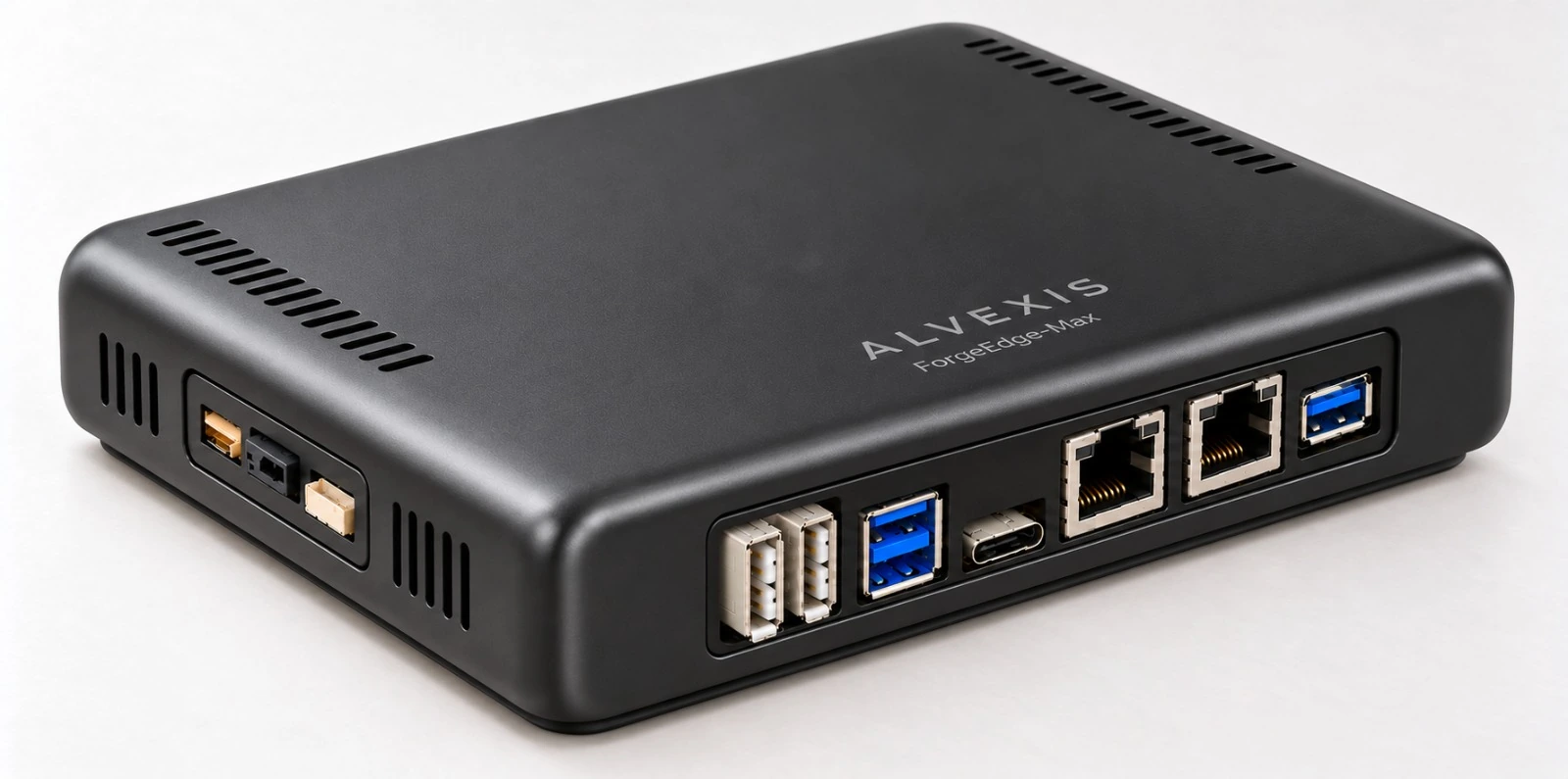
A working demonstration is the beginning. A deployable embedded system also needs repeatable builds, observable faults and a clear update and recovery strategy. We define these requirements with your team and test the result on the intended hardware.
Adapt boot configuration, kernel settings and device trees. Integrate the board support package and drivers needed to bring your selected hardware interfaces into use.
Develop firmware for sensing, communication and control. Define scheduling, timing requirements, watchdog behaviour and recovery paths around the application.
Connect camera or sensor data to local processing. Integrate suitable model runtimes and measure memory use, processing delay and behaviour under representative workloads.
Project scope
The proposal defines supported hardware, software versions, source delivery and IP arrangements. Third-party software licences, long-term maintenance and any safety or regulatory work are assessed separately.
Identify the processor, board revision, software baseline, interfaces and current failure or integration problem.
Establish a reproducible build and boot path, logging and a practical way to reproduce faults.
Implement the agreed interfaces and application behaviour. Measure timing and resource use on the target hardware.
Provide agreed code, build instructions and test evidence so your team can continue development and support.
Yes. We begin by checking the available schematics, documentation, toolchain and access to representative hardware. This establishes whether the task is software-only or also needs changes to the electronics.
We can scope BSP adaptation, boot configuration, device-tree work and driver integration around a supported processor and available vendor documentation. The requirements review identifies dependencies and any unsupported hardware features.
Local inference can be integrated when the model and selected hardware fit the power, memory and latency budget. Data collection, model suitability, updates and application validation remain part of the project scope.
We agree observable acceptance criteria and test on the target hardware. Depending on scope, this includes boot and recovery behaviour, interface operation, timing, resource use and fault handling. Results and remaining limitations are recorded.
A short technical brief is enough to start. Share the application, current development stage and the engineering support you need.
Prefer email? info@alvexis.ai
Describe your application. We review the requirements, agree the scope and prepare a development proposal.
Embedded systems connect physical inputs to controlled outputs. A microcontroller may handle acquisition and deterministic local tasks, while a more capable processor runs Linux or a larger AI workload. Define boot behavior, drivers, timestamps, communication and failure recovery together rather than selecting software independently of the electronics.
Embedded software development should include a reproducible build, versioned configuration, diagnostic access and an agreed update method. The handover needs enough information to reproduce a device issue and run acceptance tests. Prototype libraries can help establish feasibility; their resource use, licensing and maintenance status still need review before production.