
Engineering note
Time Synchronization Before Sensor Fusion
How timestamps, calibration and deterministic data paths shape robust camera, thermal and inertial fusion at the edge.
Read the note →Spark, Gate, Prime and Max compute tiers span low-power AI, Linux gateways, real-time control and multi-camera processing in a System-on-Module family.
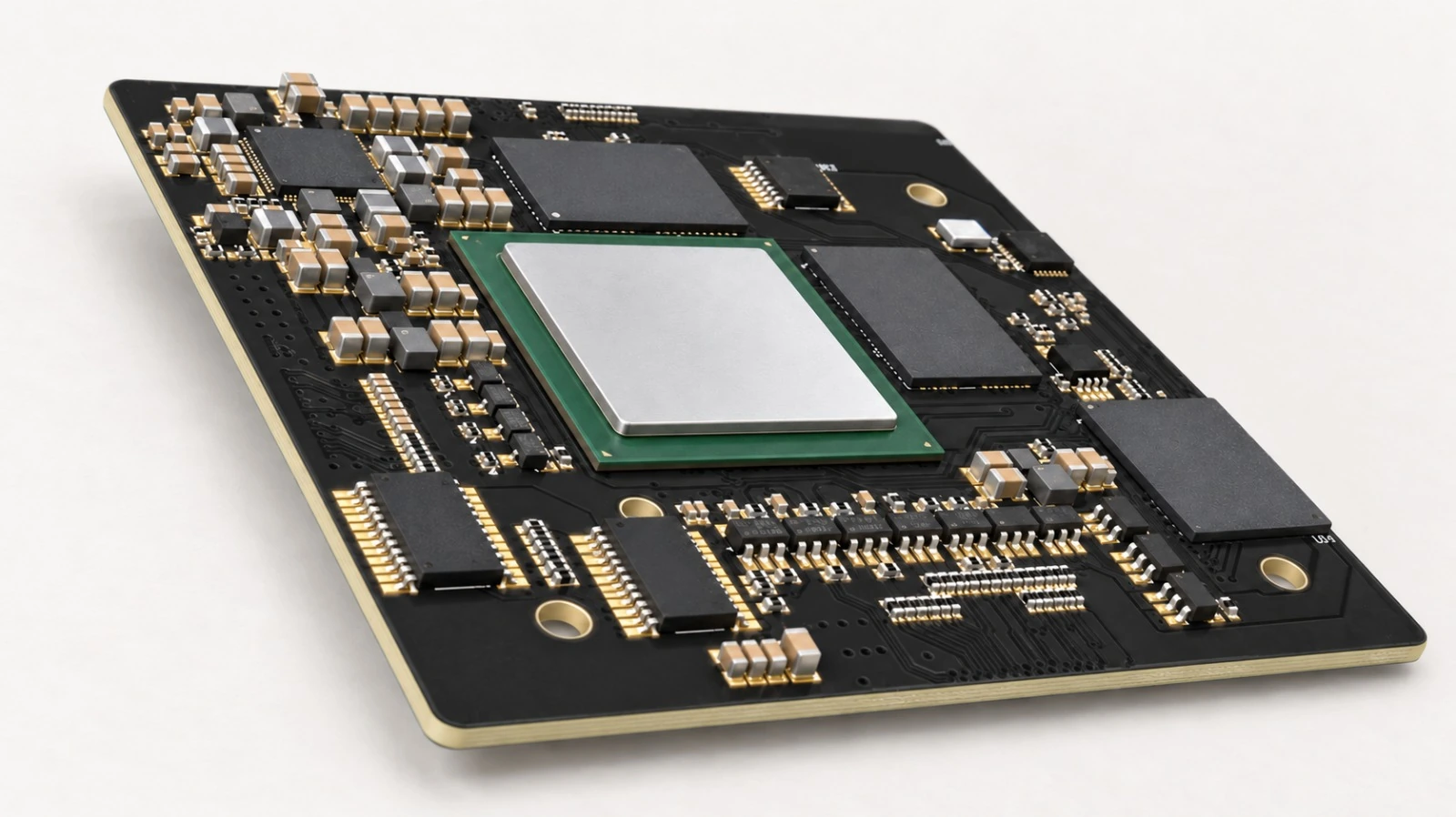
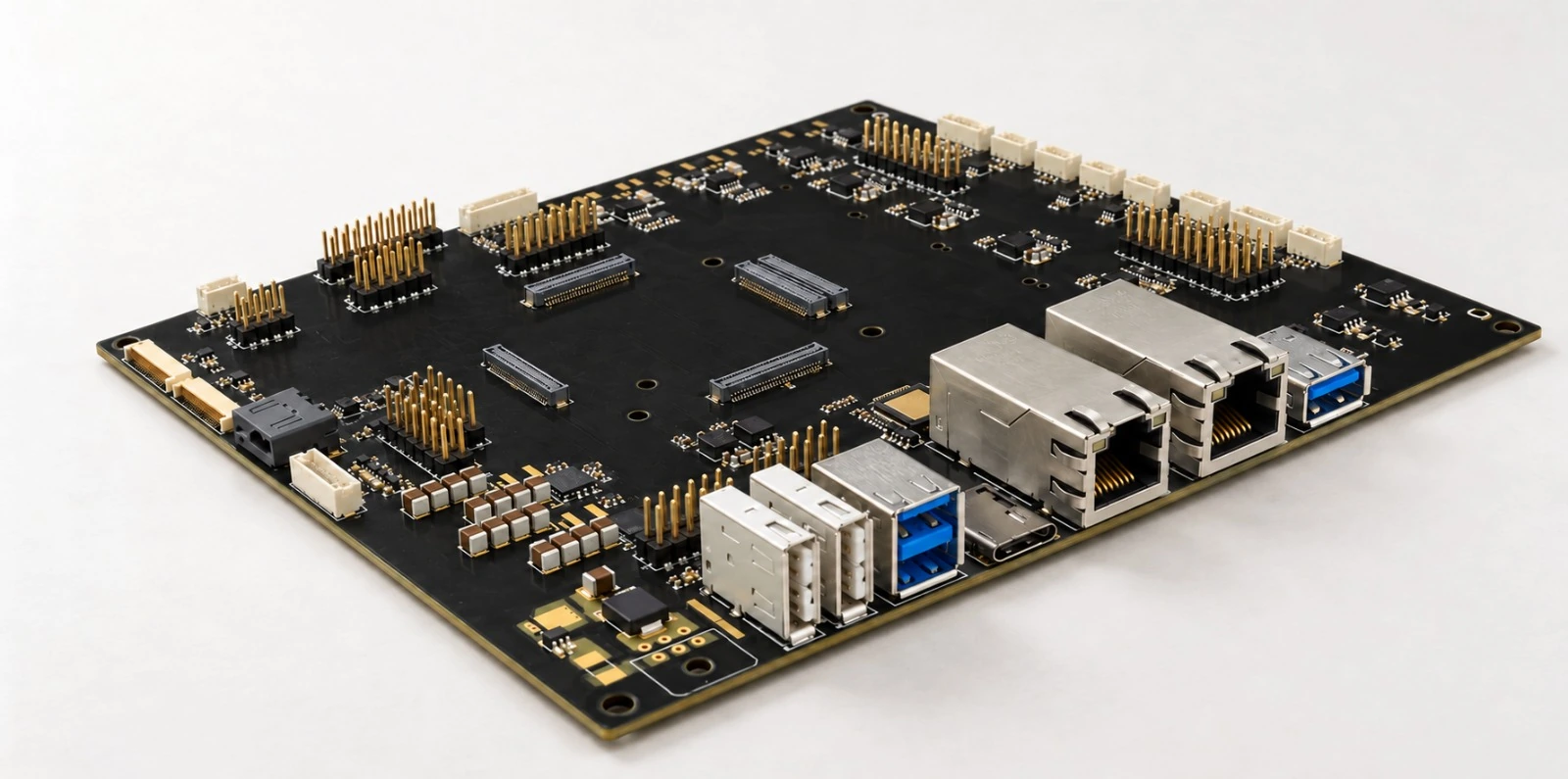
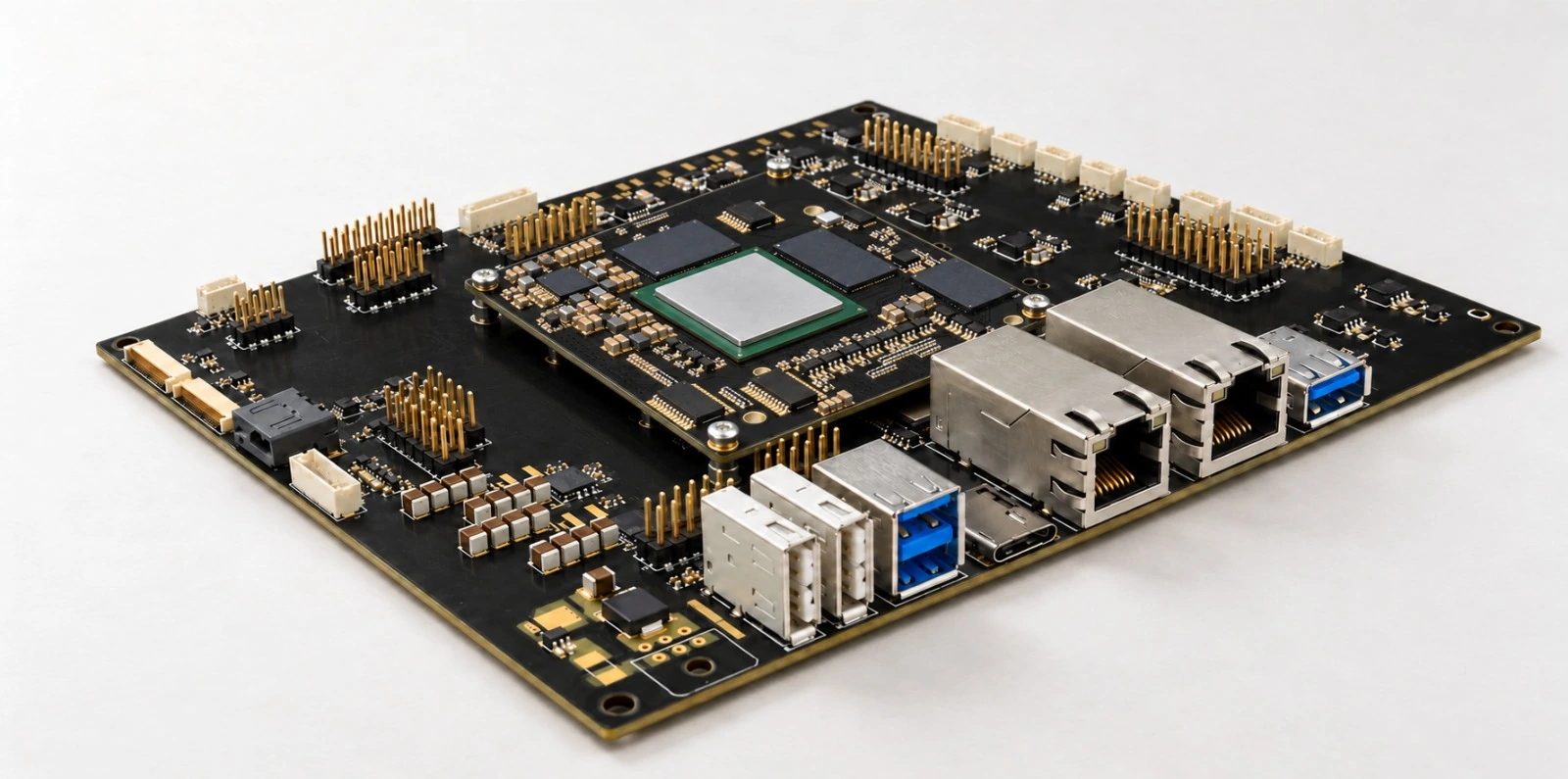
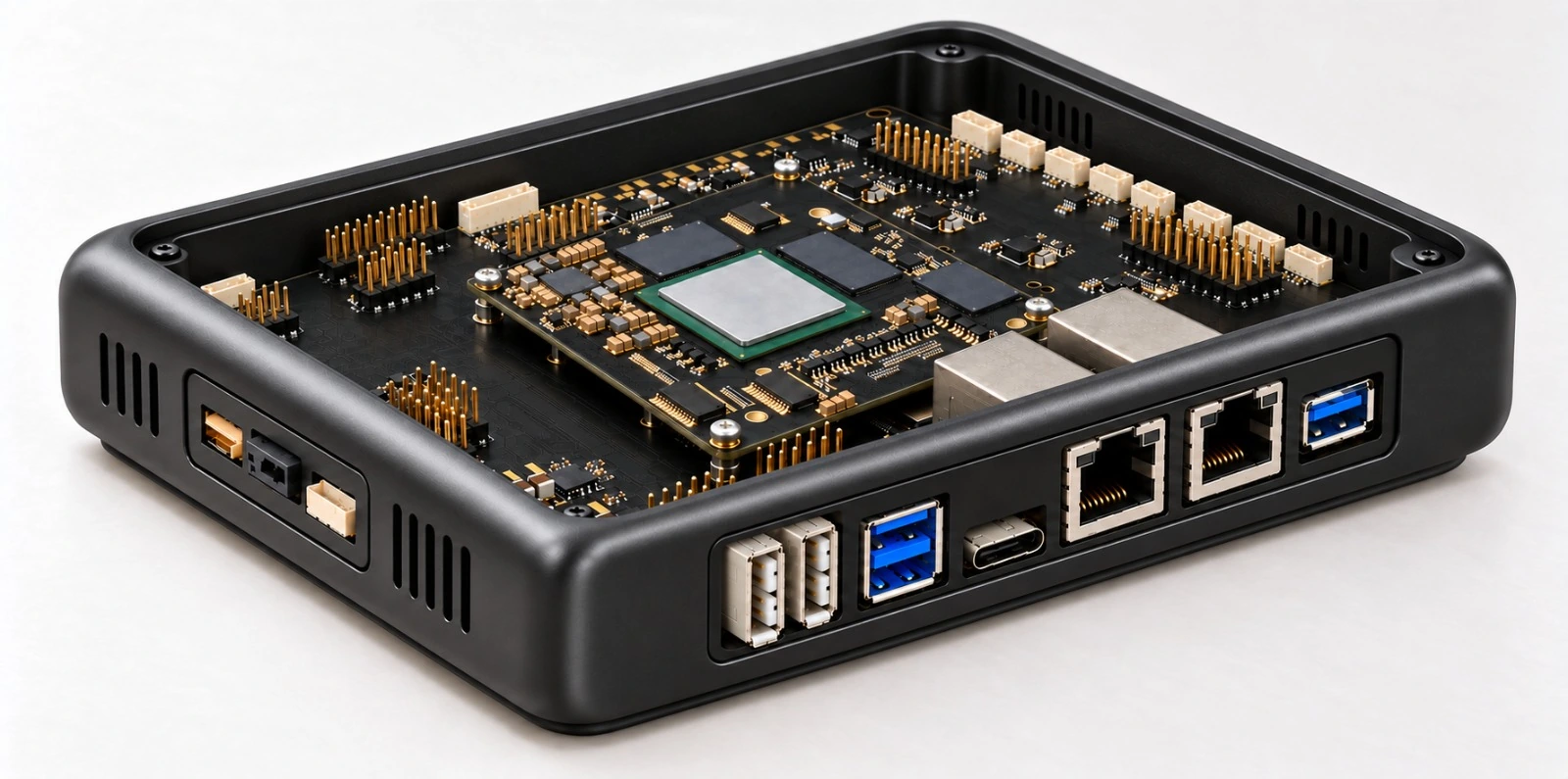
ForgeEdge-Core provides the processing foundation for Alvexis embedded platforms. Select the compute tier around the workload, then integrate memory, storage, power and interfaces through the appropriate carrier design. ForgeEdge adds the carrier, field I/O, thermal solution and enclosure around this foundation.
Spark addresses low-power AI; Gate focuses on Linux integration; Prime combines Linux, real-time control and AI; Max supports advanced vision workloads.
Select a module and carrier around camera, display, network, storage and field-interface needs.
Secure boot, hardware cryptography and variant-dependent TrustZone support a secure-update architecture.
Selected specifications from the ForgeEdge-Core datasheet. Refer to the document for the full configuration and integration notes.
| Area | Specification |
|---|---|
| Form factor | System-on-Module; carrier and module dimensions depend on variant |
| Supply | 5 V DC |
| Operating temperature | −40 °C to +85 °C as specified in the datasheet |
| Module sizes | 40 × 40, 50 × 50, 60 × 60 or 70 × 70 mm; optional 68 × 40 mm SO-DIMM |
| Camera / display | MIPI CSI-2, DSI, LVDS and other interfaces according to processor and carrier |
| Expansion | Variant-dependent PCIe, USB, Ethernet, CAN / CAN-FD, UART, SPI, I²C and I3C |
| Memory / storage | Variant-dependent DDR and LPDDR, NOR / NAND, eMMC and microSD |
| Cooling | Passive thermal design; implementation depends on the carrier and workload |
| Tier | Processor architecture | Software / workload |
|---|---|---|
| Spark | Cortex-M55 at 800 MHz | RTOS / bare-metal; approximately 600 GOPS NPU |
| Gate | Dual Cortex-A7 + Cortex-M4 | Linux + real-time control; no integrated NPU |
| Prime | Dual Cortex-A35 + Cortex-M33 + Cortex-M0+ | Linux + RTOS; approximately 1.35 TOPS NPU |
| Max | Six Cortex-A55 + Cortex-M7 + Cortex-M33 | Linux / Android, NXP eIQ and multi-camera AI |
Available interfaces, memory capacity and accelerator performance depend on the selected processor, package and carrier. Environmental standards described as targets in the datasheet are not certification claims. Consult the downloadable comparison for the selected module revision.
Ordering: FEC-1-[VARIANT], with SPK, GTE, PRM or MAX compute selection.
English · PDF · 0.4 MB · Direct download, no registration
Product options and revision-specific integration notes are included in the document.
How timestamps, calibration and deterministic data paths shape robust camera, thermal and inertial fusion at the edge.
Read the note →A practical guide to partitioning edge AI workloads across FPGA, NPU, MPU and MCU resources by latency, power and software needs.
Read the note →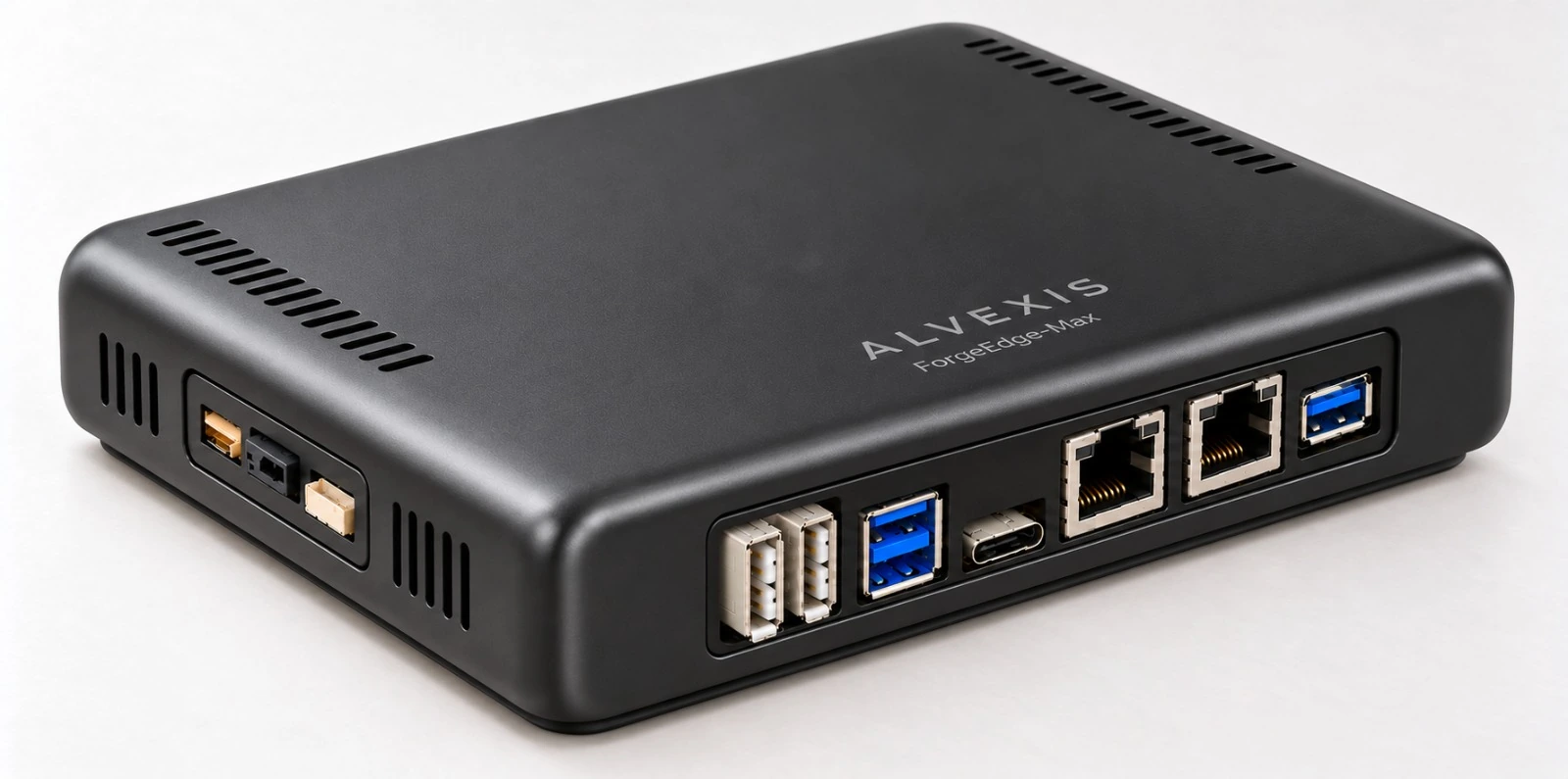
A scalable edge-computing family combining ForgeEdge-Core processing, an Alvexis carrier, field interfaces and passive cooling in BOX or PCB packages.
Explore system →