
Engineering note
From Vibration Data to Maintenance Decisions at the Edge
How bandwidth, mounting, sampling windows and local spectral features shape a useful wireless condition-monitoring system.
Read the note →Battery-powered vibration, temperature and magnetic-field measurements with timestamped local recording for rotating equipment.
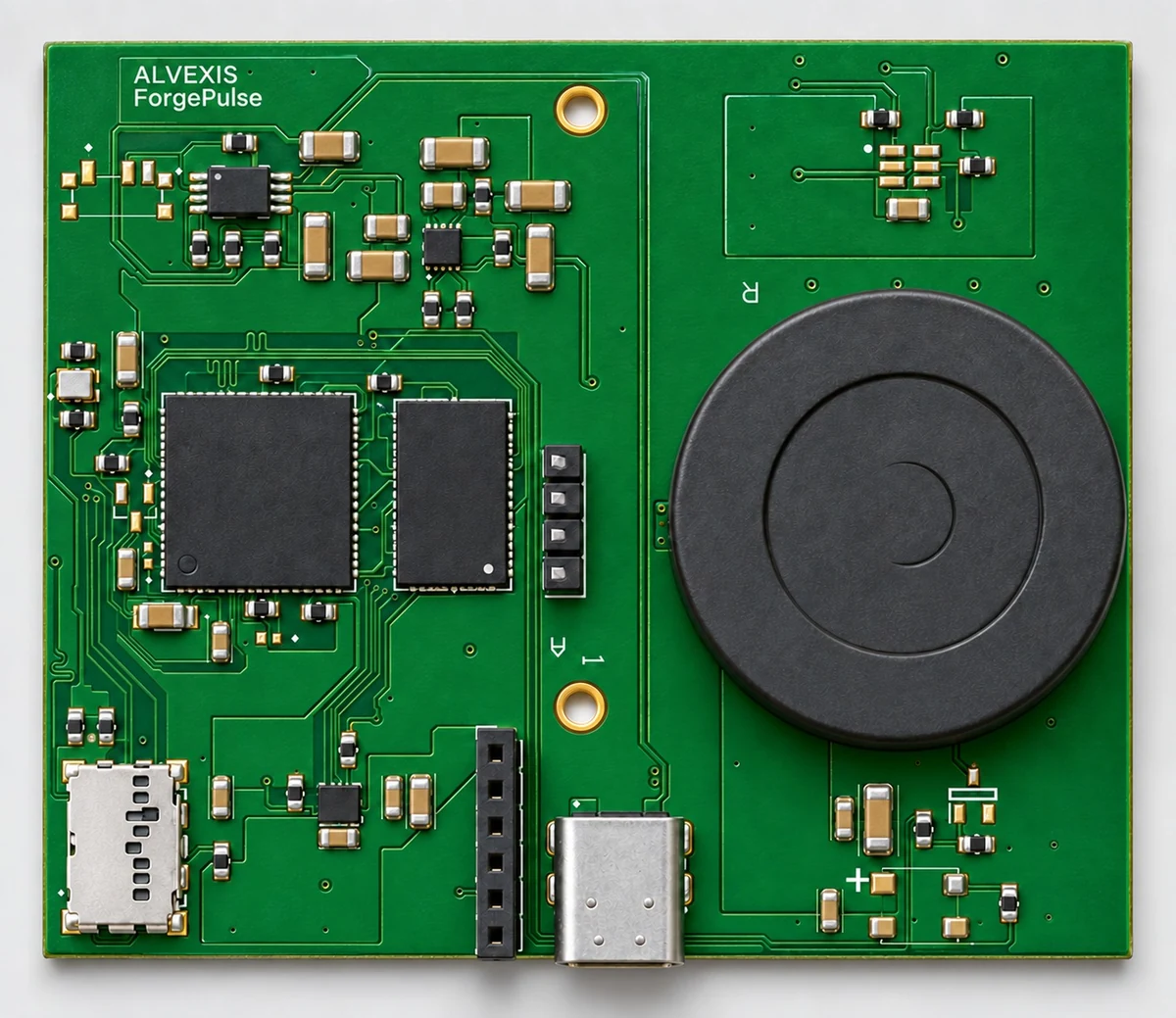
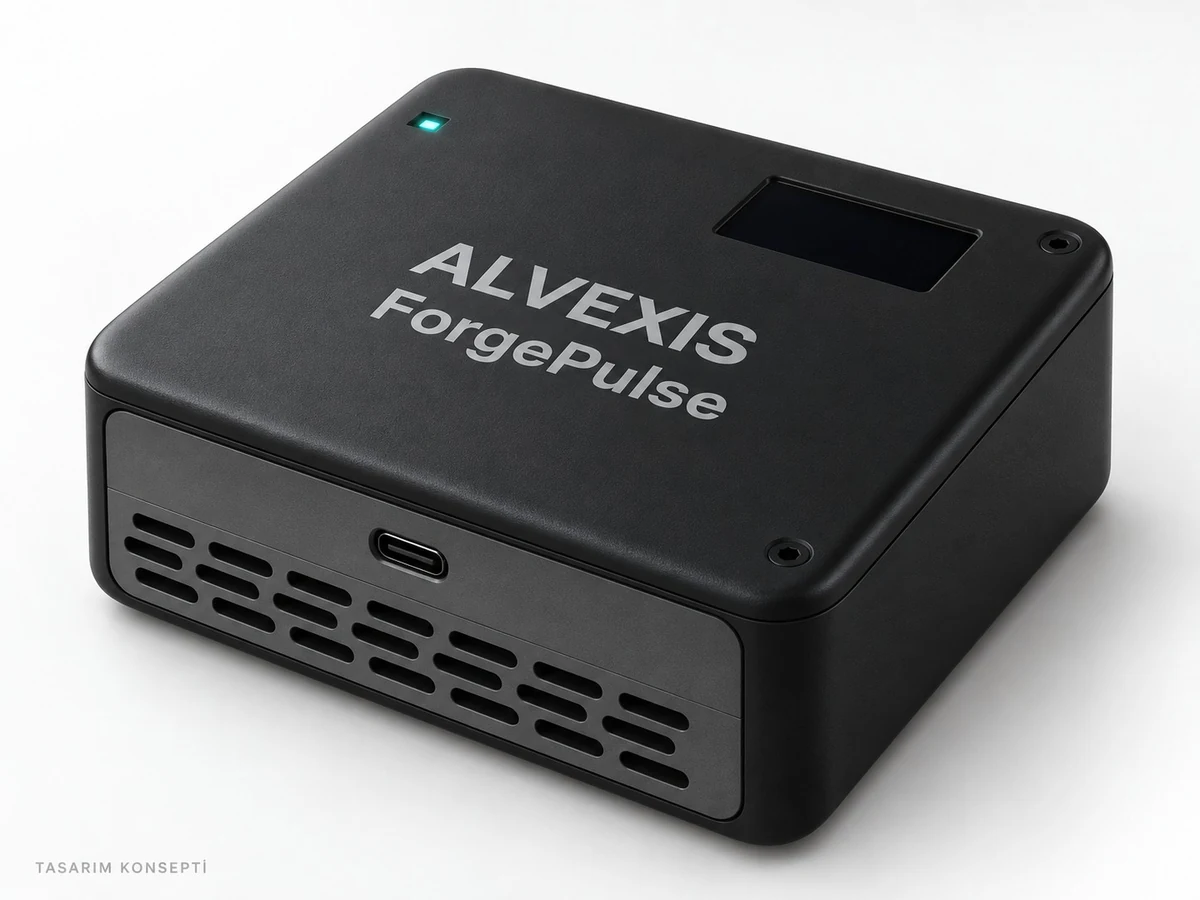
ForgePulse collects simultaneous X/Y/Z acceleration, local temperature and three-axis magnetic-field data from motors, pumps, fans, gearboxes and similar rotating assets. Removable microSD storage keeps raw measurements available for maintenance analysis.
Select ±2 g, ±4 g, ±8 g or ±16 g acceleration ranges and retain timestamped X/Y/Z records.
Record temperature and magnetic-field measurements alongside vibration, battery status, warnings and errors.
Direct threaded mounting or a magnetic base supports installation on a flat, rigid surface near the bearing housing.
Selected specifications from the ForgePulse datasheet. Refer to the document for the full configuration and integration notes.
| Area | Specification |
|---|---|
| Vibration axes | X, Y and Z measured simultaneously |
| Selectable ranges | ±2 g, ±4 g, ±8 g, ±16 g |
| Additional measurements | Local temperature and three-axis magnetic field |
| Storage | Removable push-pull microSD; timestamped raw measurements and system records |
| Local interface | OLED display, RGB status indicator and audible alerts |
| Power source | 2 × EVE ER34615 Li-SOCl₂ primary D cells |
| Battery service | Non-rechargeable; no battery charging or USB charging function |
| Mechanical | PBT GF30 enclosure; 90 × 85 × 60 mm; 500 g total |
| Protection / mounting | IP65 as specified in the datasheet; direct M2 mounting or magnetic base |
The datasheet lists 1–2 years of battery life. Service life depends on the programmed measurement, recording and sleep duty cycle. The current datasheet revision describes local recording; wireless protocol and radio configuration should be specified for the application.
English · PDF · 0.5 MB · Direct download, no registration
Product options and revision-specific integration notes are included in the document.
Evaluate a factory-mounted sensor or a kit supplied with the motor. Define the mounting, enclosure, measurement settings and user training together. Periodic data review can be scoped as a separate service after the pilot.
Read the motor monitoring guide ↗Agree the asset, mounting point, sensor settings and operating conditions.
Collect repeatable measurements and a normal-operation baseline; investigate changes in context.
Evaluate data quality, installation effort and usefulness to the maintenance team before defining the next scope.
A pilot evaluation does not itself establish validated failure prediction or a reduction in downtime.
Discuss a motor monitoring pilot ↗