
Measure the right signals
Select vibration, temperature and available operating signals for the machine. Define mounting, sampling and power or connectivity requirements before installation.
MACHINE CONDITION MONITORING
Bring vibration, temperature and operating data into a useful view of your equipment. Alvexis combines sensing, edge processing and integration to help your team investigate changing machine behaviour.
The first question is what your team needs to learn: whether a vibration trend is changing, whether operating conditions explain an alert, or which machine needs inspection. We define a pilot around that decision, available access and representative operating data.
Select vibration, temperature and available operating signals for the machine. Define mounting, sampling and power or connectivity requirements before installation.
Capture timestamped measurements and compare behaviour under known operating conditions. Use local processing and logging where connectivity is limited or raw data is too large to transfer continuously.
Present trends and agreed alerts to the maintenance team or an existing system. Record operating context and technician feedback so findings can be investigated.
Project scope
Condition monitoring identifies changes in measured behaviour. Predicting a particular failure or remaining life requires suitable fault history and validation; a new sensor installation alone does not establish that capability.
Start with a motor, pump, fan or another rotating asset and a specific maintenance question.
Capture normal operating variation with the machine state, load or speed information that is available.
Review trends and alerts against known events and technician observations. Adjust the approach where the evidence supports it.
Review data quality, alert usefulness, installation effort and integration needs before extending coverage.
No. Condition monitoring tracks measurements and changes over time. Predictive maintenance uses evidence and validated models to support a maintenance forecast. We start with reliable measurements and only make predictive claims that the available data can support.
A pilot can be designed around existing equipment where safe access, suitable mounting and useful signals are available. The installation and integration plan must account for the machine environment and operating procedures.
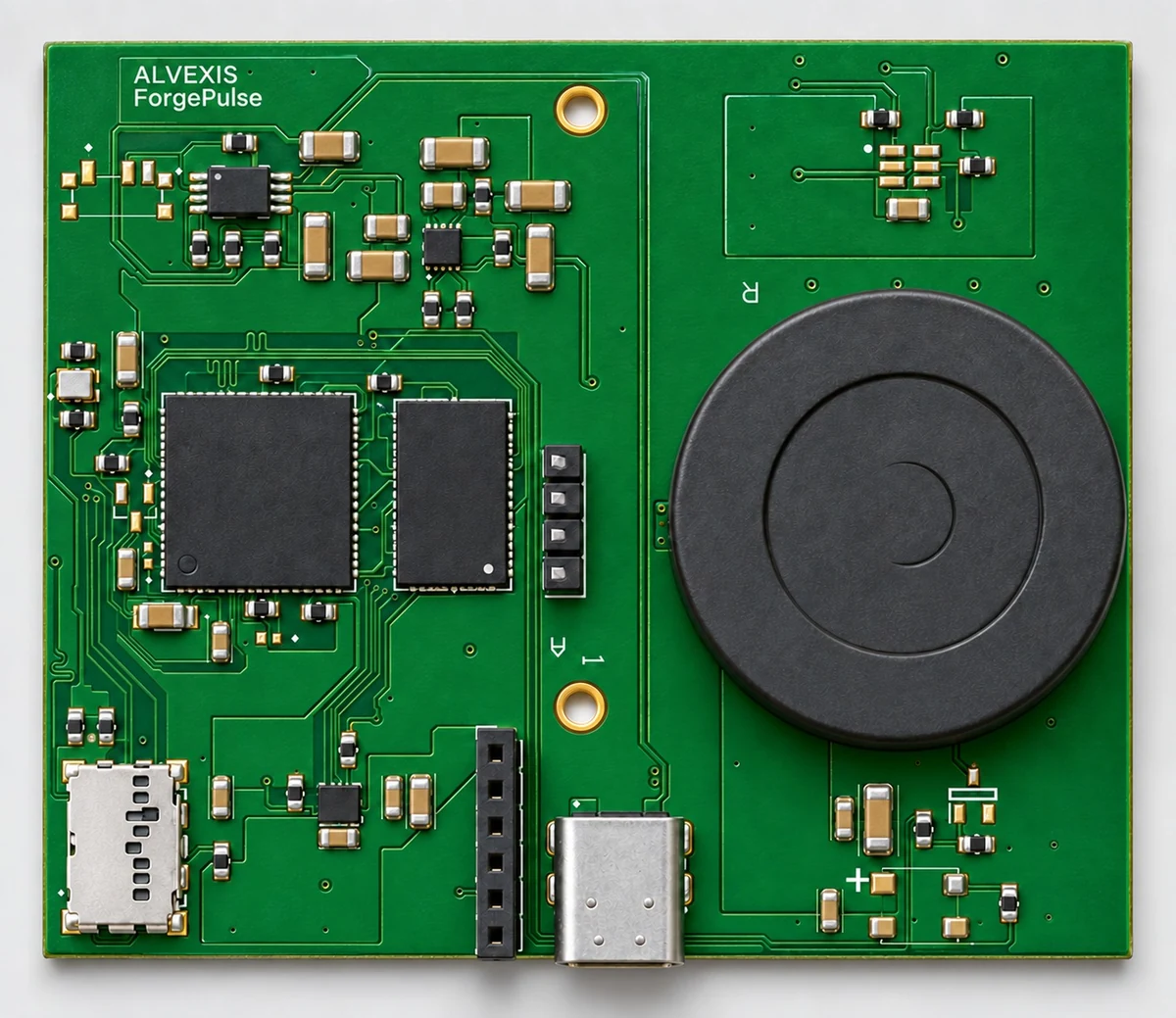
Wireless sensing may suit assets where cabling is difficult. Sampling, transmission frequency, battery use, radio coverage and the environment must be considered together. ForgePulse can be evaluated as part of the sensing architecture.
Agree criteria before installation: measurement availability, repeatability, useful operating context, alert review workload and correlation with inspection findings. Downtime reduction or failure prediction must be demonstrated over an appropriate evaluation period.
Mount at a repeatable location, establish a baseline under known load and speed, and record operating context with each measurement window. Agree who reviews a change and connect technician findings to the measurement history.
Read the motor monitoring guide ↗Agree the asset, mounting point, sensor settings and operating conditions.
Collect repeatable measurements and a normal-operation baseline; investigate changes in context.
Evaluate data quality, installation effort and usefulness to the maintenance team before defining the next scope.
A pilot evaluation does not itself establish validated failure prediction or a reduction in downtime.
Discuss a motor monitoring pilot ↗A short technical brief is enough to start. Share the application, current development stage and the engineering support you need.
Prefer email? info@alvexis.ai
Describe your application. We review the requirements, agree the scope and prepare a development proposal.