
Production-line inspection
Evaluate part temperature patterns alongside visible inspection and line triggers.
Combine an industrial thermal camera, visible-light inspection and local processing around your process. Alvexis designs the electronics, embedded software and enclosure needed to turn selected sensors into a working inspection system.
Discuss your thermal imaging project ↗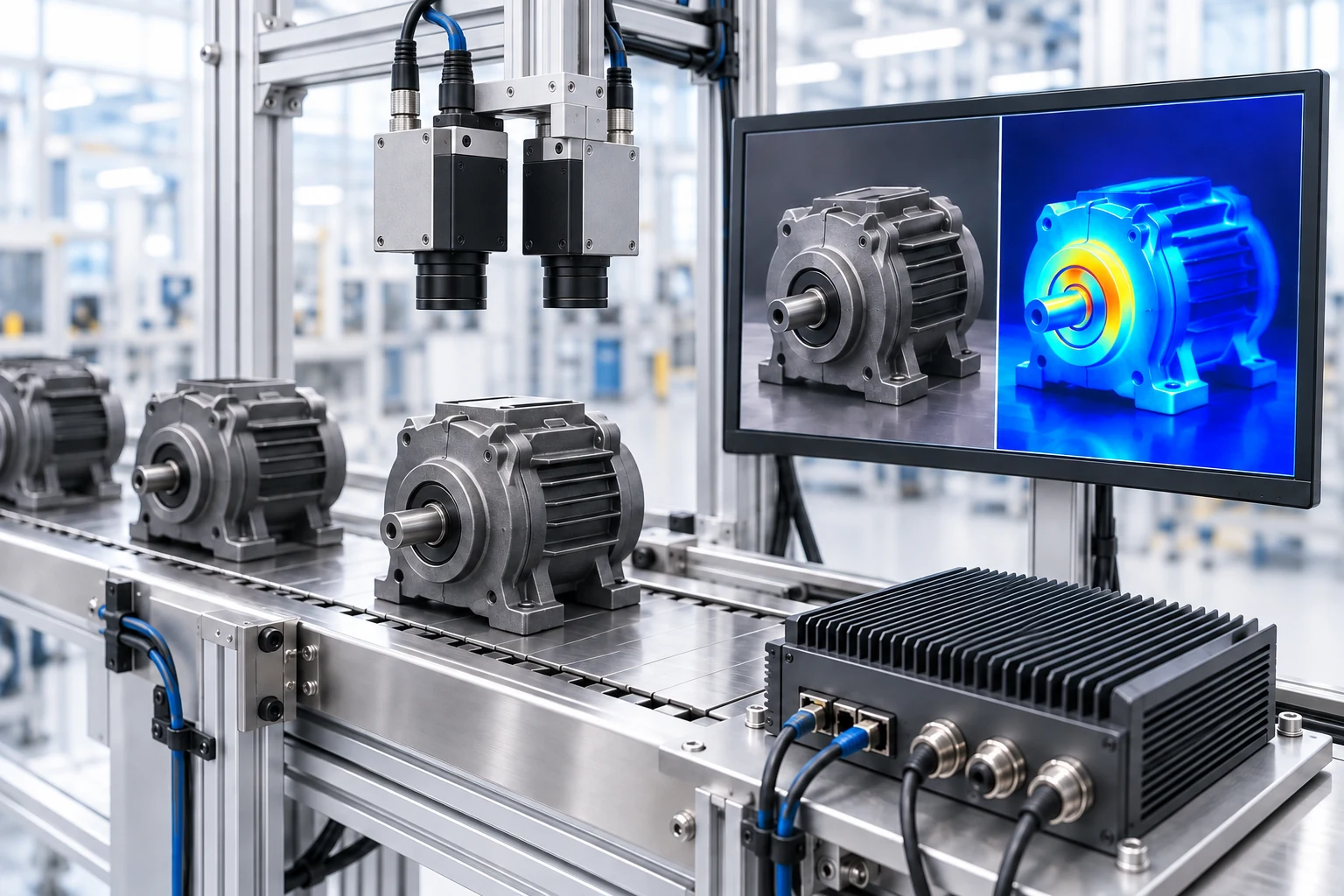
Evaluate part temperature patterns alongside visible inspection and line triggers.
Review thermal changes with load and operating conditions, complemented by vibration data.
Inspect temperature changes at connections where access and viewing geometry permit.
Pilot scope: sensor and optics selection, mounting geometry, electronics and software integration, representative-part validation and a findings report. Measurement limits and acceptance criteria are agreed at the start.
Plan your thermal inspection pilot ↗For temperature-dependent processes, a pilot can combine surface temperature patterns with visible defects or assembly checks. Radiometric measurement requires suitable camera calibration, emissivity and reflected-temperature settings; acceptance limits must be validated on representative parts.
See the defect. Act on the line.A thermal camera can complement vibration, temperature and current sensors when investigating changing conditions in motors, bearings or electrical connections. Evaluate trends under comparable loads; a thermal anomaly alone does not establish a fault diagnosis.
Understand machine condition before planning the next intervention.Share the material, temperature range, line speed, mounting distance and required machine interfaces. We can then define a practical pilot and validation plan.
Discuss your thermal imaging project ↗A separate thermal camera can add surface-temperature patterns to vibration and local temperature measurements. Define timing, viewing geometry and operating conditions before combining the results. ForgePulse local temperature sensing is distinct from infrared imaging.
Read the motor monitoring guide ↗The best thermal camera is the one that resolves the relevant temperature pattern under the actual viewing conditions. Define the smallest target, working distance, lens, motion and required measurement behavior before selecting a compact thermal imaging camera. A thermal imaging camera and a visible-light camera answer different questions; combining them requires alignment and timing.
An infrared camera observes emitted and reflected radiation. Surface properties and surroundings affect interpretation, so a shiny metal surface needs different preparation from a painted enclosure. A budget thermal camera may suit an initial experiment but still require substantial optics, mounting, calibration and software work before it becomes a repeatable inspection system.