
ForgePulse
Collect measurements at the motor and retain local records.
A compute module, an edge computer, a controller and a sensor solve different parts of a system. Compare five Alvexis platforms by what you need to build.
From your brief to a proposal ↓Start with the compute module when your product needs its own carrier. Choose ForgeEdge when you need an integrated compute platform.
See the comparison ↓Compare Duo for separate Linux and real-time execution with ForgeControl for defined industrial signal interfaces.
See the comparison ↓Start with ForgePulse for measurements and local records. Define analysis and any host-system integration separately.
See the comparison ↓| Platform | Choose it when | Connections & integration | Agree for your project |
|---|---|---|---|
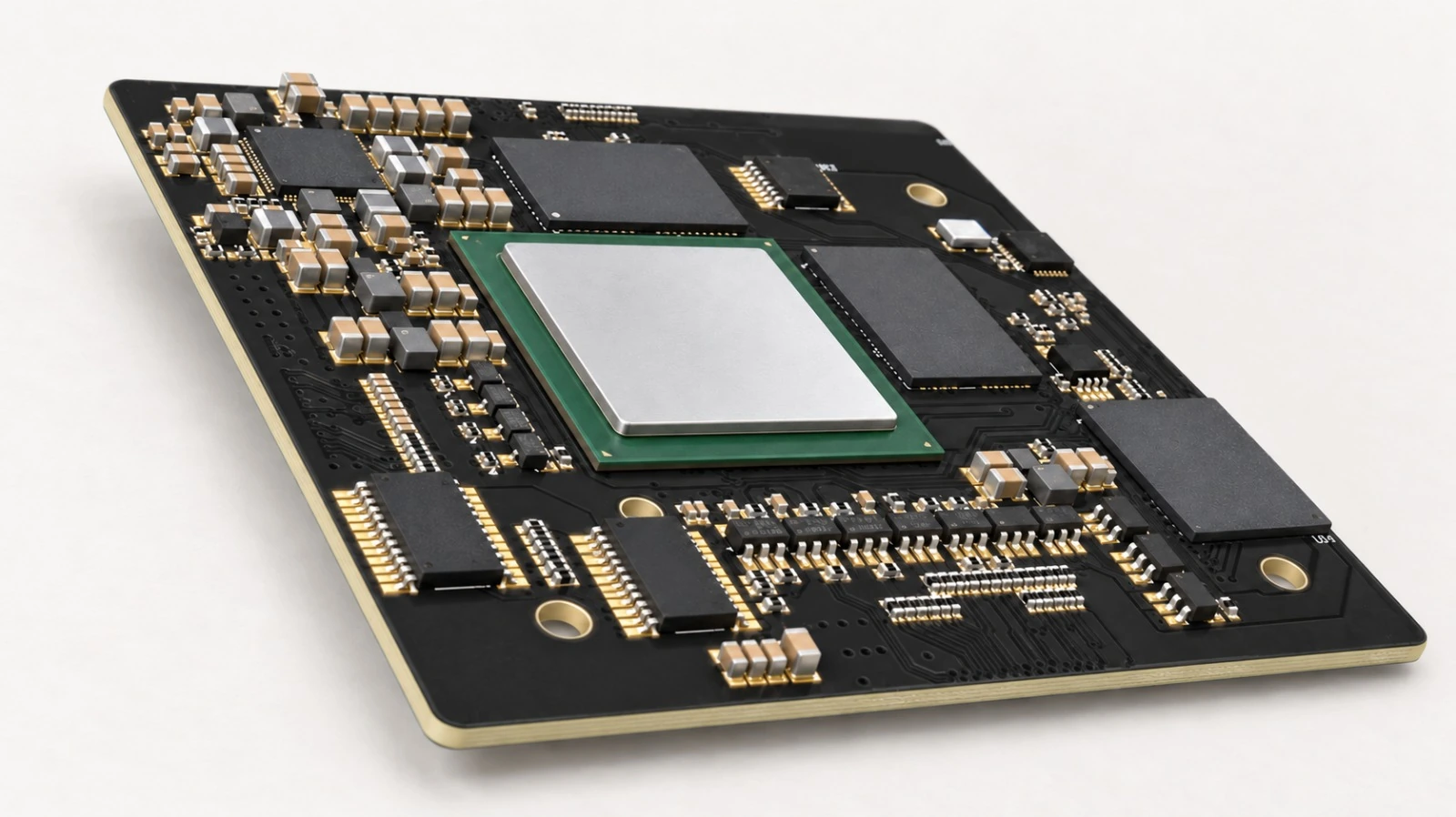 ForgeEdge-CoreCompute moduleProduct details & specifications ↗ | You are building your own embedded product and need a processing foundation. | System-on-Module with a carrier. Camera, network, USB and field interfaces depend on the compute tier and carrier design. | Compute tier, carrier, memory, power, thermal path and software support. |
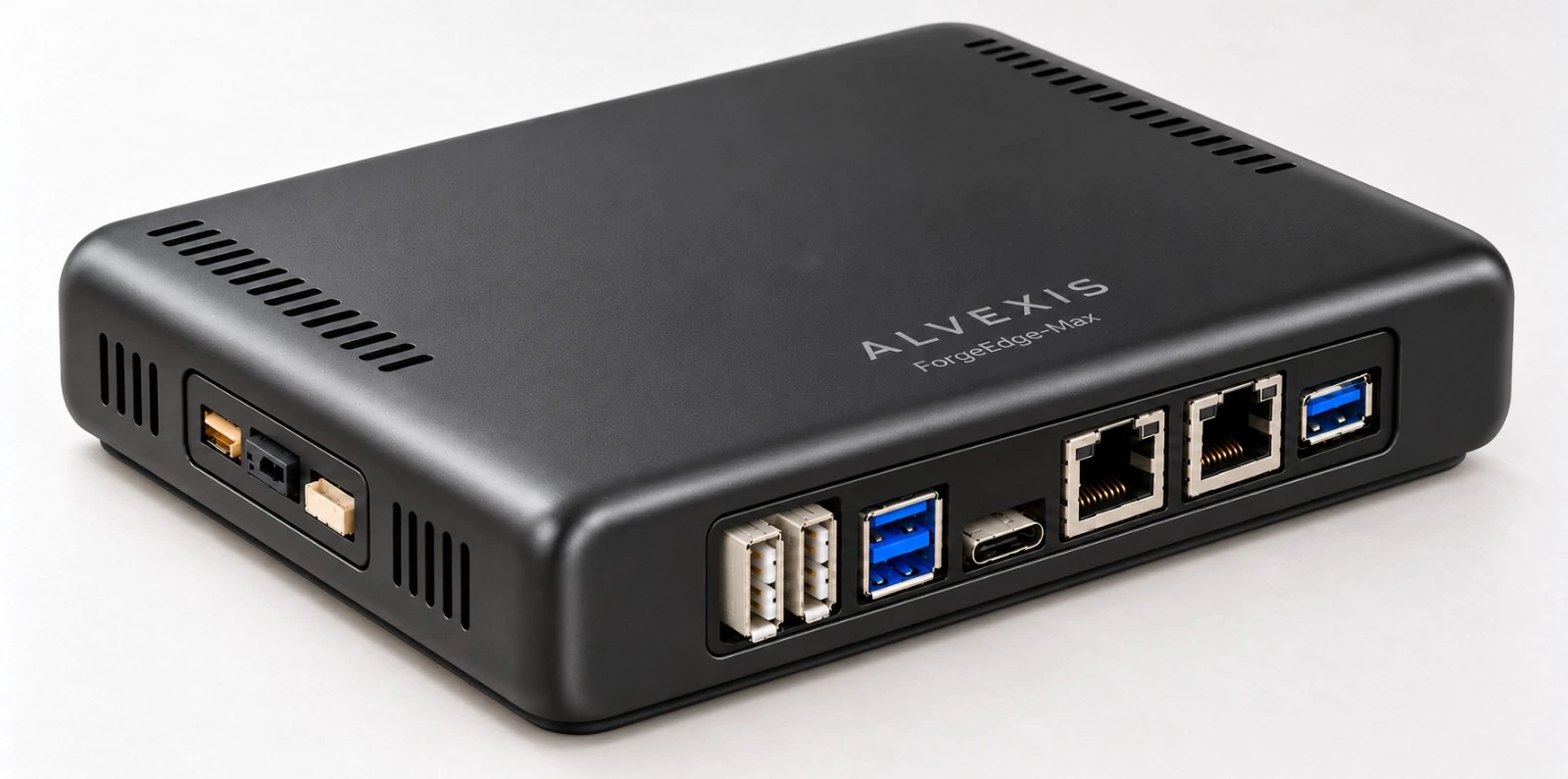 ForgeEdgeIntegrated edge computerProduct details & specifications ↗ | You need local processing, sensor integration or vision in a BOX or open-PCB platform. | Compute module plus carrier, field I/O and cooling. 9–36 V DC; Ethernet, USB, cameras and CAN availability varies by configuration. | Workload, compute tier, BOX or PCB format, required interfaces and application software. |
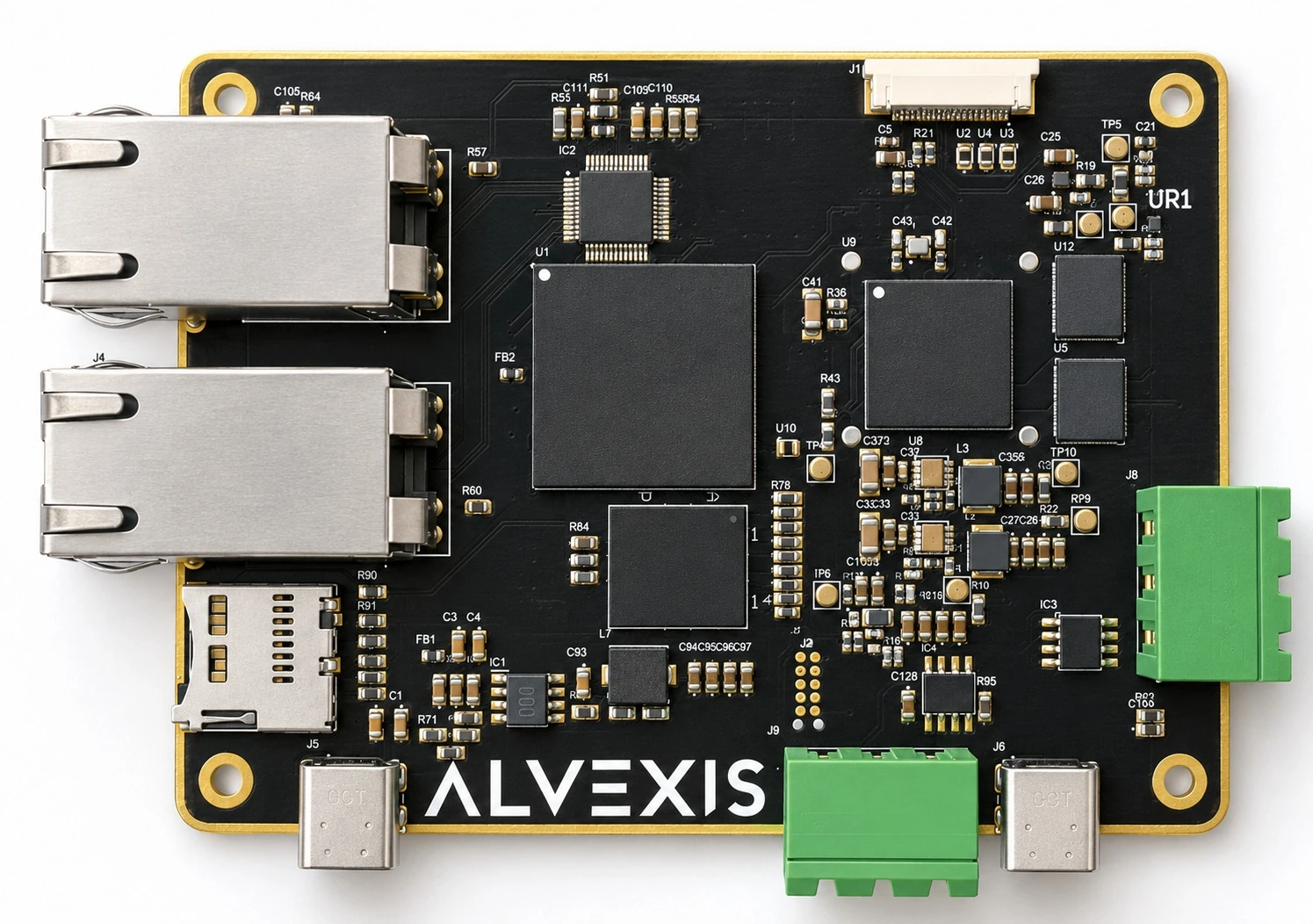 ForgeEdge-DuoHybrid Linux & real-time platformProduct details & specifications ↗ | Your design needs Linux applications alongside a separate MCU layer for time-critical processing. | MCU–MPU architecture; two Ethernet ports, CAN, RS-485 and camera interfaces. Linux plus RTOS or bare-metal execution. | Task partitioning, interprocessor data flow, firmware, drivers and mechanical integration. |
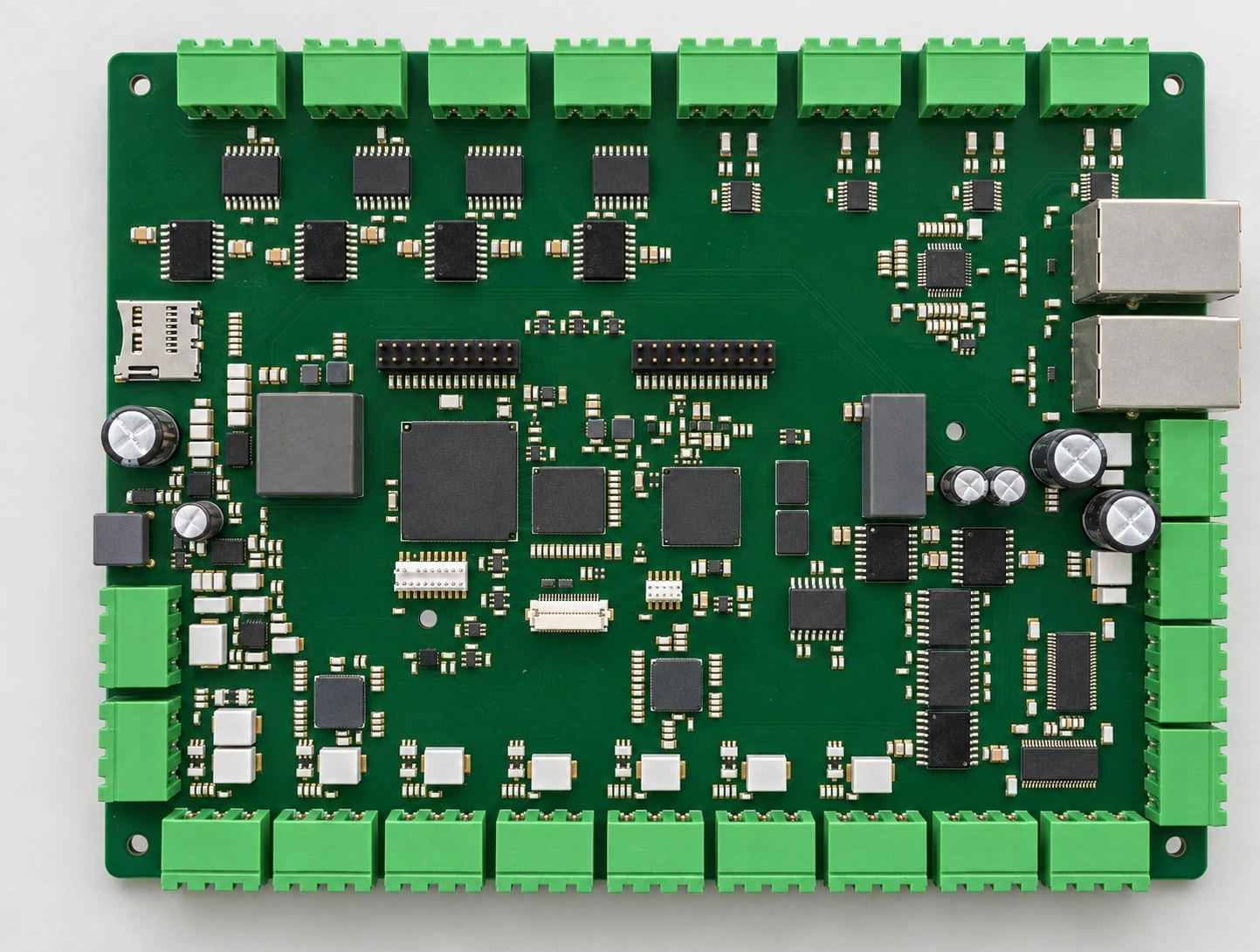 ForgeControlIndustrial control & acquisitionProduct details & specifications ↗ | You need machine signals, analog transmitters and camera results in one industrial control design. | 8 DI + 8 DO; 4 AI + 4 AO; 2 CAN 2.0 + 2 RS-485; MIPI camera input. Two Ethernet ports share one switch. | Signal mapping, PLC connection, control logic, logging and camera application. CAN-FD is not supported in this scope. |
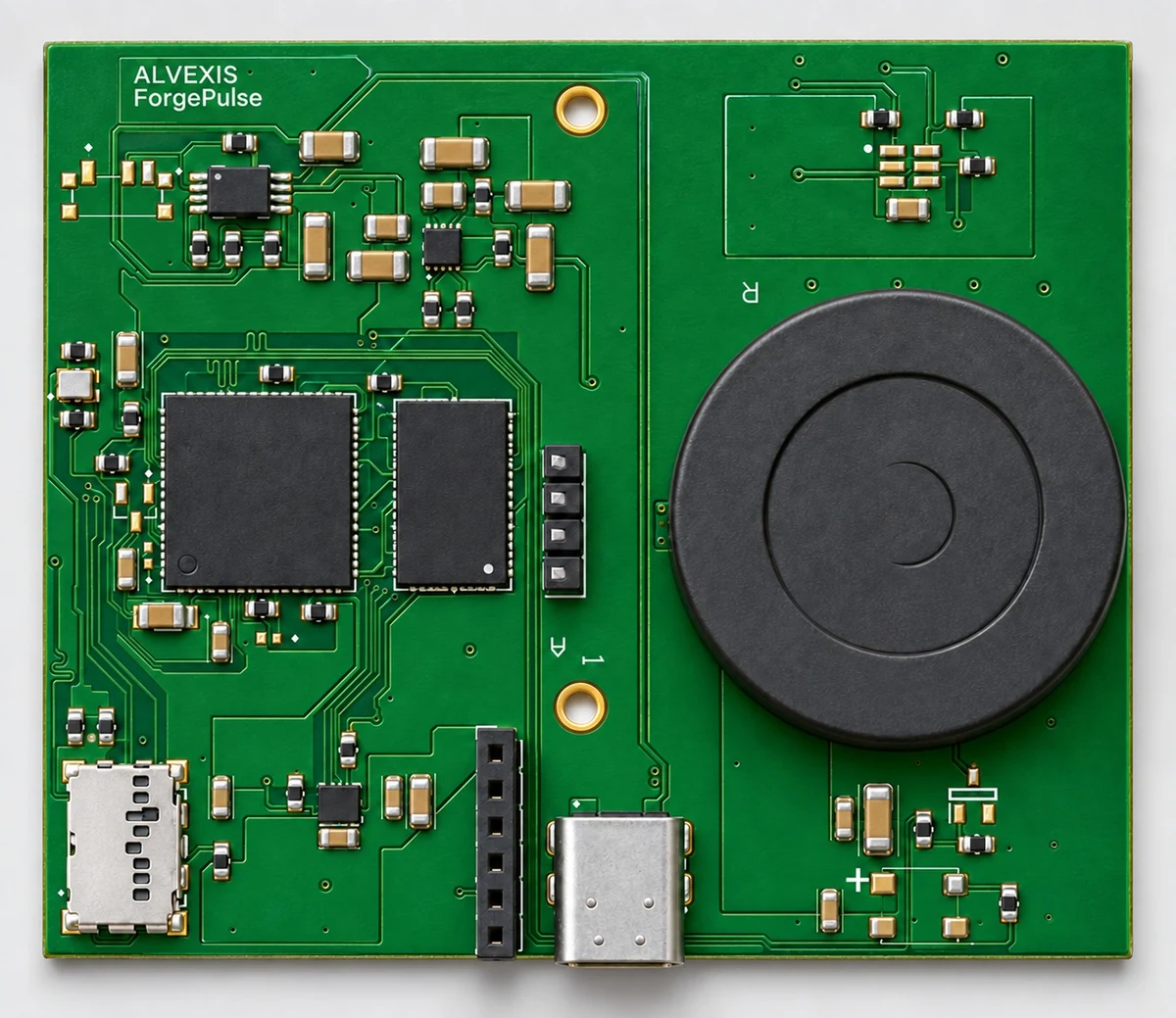 ForgePulseCondition sensing & recordingProduct details & specifications ↗ | You want repeatable motor or rotating-equipment measurements for a monitoring pilot. | Three-axis vibration, local temperature and magnetic-field sensing; timestamped microSD records and battery power. | Mounting, measurement windows and duty cycle. Specify analysis, data transfer and any wireless link separately. |
This is a selection guide, not an interchangeability or compatibility guarantee. Confirm the selected revision, interfaces, availability and software scope in the quotation. Product-page datasheets provide revision-specific details.
Collect measurements at the motor and retain local records.
Where needed, acquire compatible machine signals and operating context.
Where needed, scope a host for local processing, storage and system interfaces.
These are possible engineering roles. The products are not presented as a preconfigured, plug-and-play chain; data access, protocols and software are agreed and tested for the application.
See the motor-manufacturer application →Describe the task, connections, operating environment, quantity and target date. A short brief is enough to begin.
We assess the platform, clarify missing requirements and distinguish an existing configuration from custom development.
The proposal sets out deliverables, assumptions, price and schedule. Engineering, prototypes and production are separated where applicable.
Work starts after scope and commercial terms are agreed. Prototype tests and acceptance criteria are defined before the agreed production stage.
Describe what the device must measure, process or control. Add required connections, power and mounting constraints, plus a target quantity if known. You do not need to choose a product first.
Prefer email? info@alvexis.ai
We review the fit, clarify any missing requirements and prepare the agreed technical scope and proposal.